Environmental management

Strong partnerships, sound research and transparency are the key elements of Woodside's approach to the environment.

On this page
Our strategy

Our strategy

At Woodside, our goal is to operate responsibly - protecting biodiversity, implementing pollution prevention measures, using resources efficiently, and supporting the long-term health of the environments where we work.

We recognise the value of nature and our shared responsibility to protect it. Strong environmental performance underpins our operational excellence, our relationships with communities, and the trust placed in us by regulators, shareholders, and investors.

We take a risk-based approach underpinned by credible-science. Guided by our Environment & Biodiversity Policy and Environment Management Standard, we apply the mitigation hierarchy to avoid, minimise, remediate, or offset, so that we manage impacts consistently across all our operations, focusing greatest effort where risks are highest.

We integrate environmental considerations into every stage of our work, from project design and construction to operations and decommissioning, and adapt our approach to reflect local environmental sensitivities.

We invest in research, monitoring, and relationships with communities, governments, industry and academia to improve our understanding and environmental performance.

Environmental impacts and risks

Environmental impacts and risks

At Woodside, understanding and managing environmental risks is central to how we operate responsibly. We use a risk-based approach guided by international standards such as ISO 14001 and ISO 31000, and by recognised frameworks including the IFC Performance Standards and the Equator Principles. This ensures we manage risks consistently and focus our efforts where they matter most.

Our approach aims to, where possible, exceed local regulatory requirements. We keep environmental impacts as low as reasonably practicable, starting by looking for ways to avoid them, and then reducing or minimising where avoidance isn’t feasible.

By applying the mitigation hierarchy we integrate environmental management into project planning and decision-making. This helps us protect important environmental values such as threatened species, sensitive habitats, and marine ecosystems.

Once operations are underway, we closely monitor and review performance to ensure our controls are effective and to identify opportunities for improvement. We also collaborate with governments, researchers, and environmental organisations to share knowledge and strengthen environmental outcomes across our projects.

Through this approach, Woodside aims to continually improve how we manage environmental risks and impacts through our operations.

Environmental approvals

Environmental approvals

Woodside operates a global portfolio of projects and operating assets, each requiring rigorous environmental approvals to proceed and continue operating. This requires significant capability and capacity in the Woodside team in order to understand the approvals requirements and processes in different jurisdictions, undertake environmental research, impact assessment and public consultation activities, and ultimately propose environmental management plans that are capable of being accepted by regulators and can be monitored and complied with.

At Woodside, we follow a global environmental management framework that can be adapted to local conditions. This ensures all our activities meet legal, regulatory, and stakeholder expectations wherever we operate. Our approach aligns with good international practices, such as guidance from Ipieca and IOGP, to reflect our commitment to responsible operations.

Environmental approvals are an essential part of how we plan, develop and manage our projects. They are designed to be clear and transparent and meet legislative requirements of a country. Before starting any new activity, we identify the relevant environmental laws and approvals required. We prepare documentation supported by Environmental Impact Assessments (EIAs), baseline studies, and consultation with relevant stakeholders to ensure feedback is captured to inform its planning for future activities. To find out more, visit the consultation activities page.

Through the required regulatory approvals process, we work constructively with governments, regulators, communities and other stakeholders to address environmental considerations, demonstrate compliance, and align project plans with applicable regulatory conditions and management requirements.

Generally, the requirements of each environmental impact assessment helps defines each project’s scope, identifies potential environmental risks and impacts, and sets out the controls and mitigation measures we will use to manage them. In regions where local regulations are still developing, we apply Woodside’s own Environment Management Standard and are guided by international benchmarks such as the IFC Performance Standards, Equator Principles, and ISO 14001.

Once approvals are granted, we maintain compliance through environmental management plans, monitoring, and regular reporting. We track all regulatory commitments through internal systems to ensure performance is verified and transparently reported.

This structured approach helps Woodside meet or exceed regulatory expectations while protecting the unique environmental values of the regions where we operate.

Investing in science

Investing in science

Understanding the environments where we operate is fundamental to environmental management. Science helps us make informed decisions and continually improve our performance throughout the life cycle of our operations — from exploration and development through to production and decommissioning.

Our investment in strategic scientific research addresses emerging risks to support our environmental management processes. We collaborate with some of the world’s leading researchers and organisations to better understand the unique environments in which we operate and inform decision-making. Our current science studies focus on:

  • coral reef, benthic, and fish communities
  • underwater noise
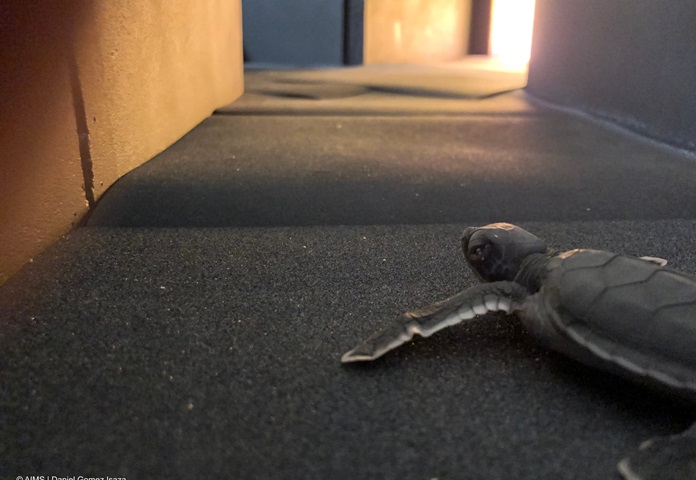
  • light emissions and
  • decommissioning and its environmental considerations.

Our commitment to shared scientific understanding of environmental characteristics, including biodiversity in the regions and areas in which we undertake activities, is demonstrated by our numerous collaborations with science and research organisations. The knowledge from these programs supports our ongoing environmental management processes including our impact assessment and improving our management controls to avoid and reduce our environmental impacts. In addition, we support our research partnerships to publish research findings in international peer reviewed scientific journals. In 2025, there were at least 12 scientific articles in international journals highlighting the findings of research supported by Woodside.

In 2025, our strategic science programs included a range of initiatives with clear focus areas:

  • Long-term monitoring of remote reef systems and submerged reefs off Western Australia, extending datasets to 30 years and over 10 years respectively.
  • Research to improve understanding of underwater noise and artificial light at night (ALAN) from our activities.
  • Support for innovative technology and training programs to enhance marine fauna detection.

We also continue to contribute to joint industry collaborations, such as:

  • The National Decommissioning Research Initiative, which studies the environmental impacts, risks, and benefits of offshore decommissioning options.
  • The IOGP Joint Industry Programmes on Sound and Marine Life and Environmental Genomics.

In 2026, Woodside will continue to support research that enhances our ability to avoid, reduce, and better manage the environmental impacts of our activities while contributing to broader scientific understanding of the biodiversity around us.

See our featured case studies relating to investing in science here

Environment data table

For more information refer to the environment-related data table.

View data table

Water management

Water management

Water is essential to both Woodside’s operations and the communities where we work. We manage it responsibly to support business continuity, protect the environment, and respect the needs of our communities who depend on this shared resource.

We recognise that water supports healthy ecosystems, cultural and spiritual values, and community livelihoods. Managing water responsibly means considering all these values in our decision-making.

Our water management approach focuses on two key areas — the use of freshwater resources that support our operations and the management and discharge of produced water, which is a by-product of oil and gas extraction. We aim to use freshwater efficiently and reduce impacts to the environment from discharges wherever we operate.

Through our Water Resource Management Framework (WRMF), we assess and manage water-related risks across all our activities. The framework helps us identify potential challenges such as water availability, quality, and regulatory or community concerns — and guides us to take action early.

Our operated activities are evaluated to understand local water conditions and potential risks. Where higher risks are identified, we carry out detailed assessments and apply the water mitigation hierarchy — eliminate, find alternatives, reduce, reuse, recycle, dispose, with a consideration to enhance where it makes sense — to manage impacts and use water efficiently.

Our approach is informed by international standards, including the UN Global Compact CEO Water Mandate, the Alliance for Water Stewardship, and IPIECA Water Stewardship Guidance. These principles guide how we manage water responsibly, sustainably, and transparently throughout the life of every project.

Freshwater Use

Woodside uses freshwater to support a range of operational activities, particularly at our onshore facilities. Our freshwater use is expected to increase in the coming years as new projects, including Beaumont New Ammonia and Louisiana LNG, begin operations.

As we expand, we are strengthening our understanding of water risks across our portfolio. This will help us manage freshwater use responsibly and in line with international standards, Woodside’s internal standards, local regulatory requirements, and the expectations of our stakeholders.

Our goal is to ensure that freshwater is used efficiently, and in ways that protect the surrounding environment and the communities that share these water resources.

Catchment water risk

Water is a shared and limited resource, and therefore we consider water-related risks that extend beyond our operational boundaries. These risks can include changes in water quantity and quality, as well as regulatory, reputational or compliance-related factors.

We use the World Resources Institute (WRI) Aqueduct Water Risk Atlas to evaluate catchment-level risks for each of our onshore operating and construction assets. This helps us understand regional conditions and potential pressures on water availability.

To ensure accuracy, we validate the assessment from the WRI Aqueduct Water Risk Atlas by integrating local knowledge, experience, and context from our subject matter experts. This ground-truthing process helps confirm that catchment risk assessments reflect the specific conditions and operational realities at each site.

We publish our water performance data annually, including freshwater consumption and intensity, in our Environment Data Table. Currently, Woodside has no onshore operating assets located in designated water-stressed areas, as defined by the WRI Aqueduct Water Risk Atlas.

The WRI Aqueduct Water Risk Atlas defines water-stressed areas as regions facing "high" or "extremely high" water risk. This occurs when demand for water from households, industry, agriculture and livestock is close to or exceeds the amount of renewable water available. Water availability can also be affected by upstream water use and large dams, which reduce the flow downstream. Areas with high or extremely high water stress experience greater competition for limited water resources among users.

By assessing and monitoring catchment-level risks, we ensure our freshwater use remains responsible, compliant, and aligned with our commitment to sustainable resource management.

Operational water risk

Operational water risks are those that arise directly from our activities. These risks are managed through Woodside’s Risk Management Framework and Water Resource Management Framework, which guide how we identify, assess and manage water-related issues.

Water risks can affect a range of areas including health and safety, environmental and cultural heritage values, community wellbeing, business continuity, compliance, reputation, and our social licence to operate.

Findings from catchment-level water risk assessments are used to strengthen our understanding of site-specific and asset-level water risks. For instance, if catchment assessments identify water scarcity as a high risk, this insight helps us evaluate potential impacts on operations and business continuity at that location.

We continue to advance how we assess and manage water risks across our portfolio. As part of this progression, we are integrating water-related risks more systematically into our onshore environmental risk registers and refining how we monitor and report them. This ongoing work is helping Woodside build a more consistent and mature approach to water risk management across our operations.

Produced water

Produced water is a by-product from extraction and separation of hydrocarbons from reservoir formation fluids. This produced formation water contains small amounts of residual contaminants such as hydrocarbons and metals.Woodside’s produced water discharge management is governed by regulatory compliance requirements and the emission and discharges management performance standards found within Woodside's Environment Management Standard. We publish produced water performance data annually in our Environment Data Table.

Based on a range of considerations, including environmental sensitivities and reservoir characteristics, some of our facilities are designed to re-inject produced water to reduce discharge emissions and improve reservoir performance. However, this is not possible at all facilities and some of Woodside’s offshore assets in Australia discharge produced formation water into the marine receiving environment. Regulations permit this under controlled conditions.

To better understand and appropriately monitor and manage produced water discharges in Australia, Woodside has developed a risk based, adaptive management framework. This allows us to monitor for changing conditions in discharges and adjust our process accordingly. Real time and scheduled monitoring of key indicators are utilised for ongoing compliance verification and may trigger an adaptive response if change occurs. The adaptive framework manages produced water discharges across a range of producing facilities, with varied chemical composition and treatment technologies, through a robust and consistent approach.

Woodside annually analyses a series of samples of each facility’s produced water to test its chemical characterisation to assess for potential impacts to the environment. In addition to the annual facility-based sampling, Woodside has undertaken comprehensive field water quality and sediment monitoring programs to assess for changes in the environment. These surveys verify compliance against regulatory requirements and demonstrate our operational controls are effective in meeting the environmental performance objectives for discharge of produced water. The 2021/2022 and 2015/2016 field programs verified the effectiveness of the implemented controls during the life of the asset.

Our international operations are also required to meet rigorous local permit conditions. We monitor the volume and quality of produced water discharges through our environmental tracking system, which provides visibility across our operations and supports proactive management. This allows us to identify and address potential issues before permitted discharge limits are exceeded.

Waste management

Waste management

At Woodside, we aim to reduce the impact of waste on the environment and the communities where we operate. We manage waste responsibly through a structured, company-wide approach that meets legal requirements and supports continuous improvement.

Each of our projects and operating sites has a Waste Management Plan that outlines how waste is prevented, managed, and disposed of safely. Our Waste Management Standard sets expectations that all waste — from generation to final disposal — is handled in an environmentally responsible way.

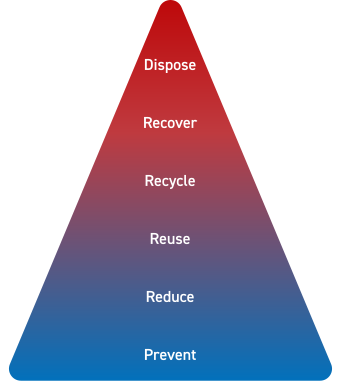
We identify all types of waste our activities produce, such as drilling fluids, scrap metal, plastics and chemicals. Using the waste hierarchy, we prioritise avoiding, reducing, reusing and recycling before disposal.

See our featured case study on waste management here

Working with service providers

We work with trusted waste management providers who meet strict environmental and safety standards. Their facilities and procedures are audited to ensure they have the right licences, equipment, and capability. We also share learnings with our frontline operations teams both onshore and offshore to continually improve waste management and raise awareness on waste reduction practices across our operations.

Safe handling and monitoring

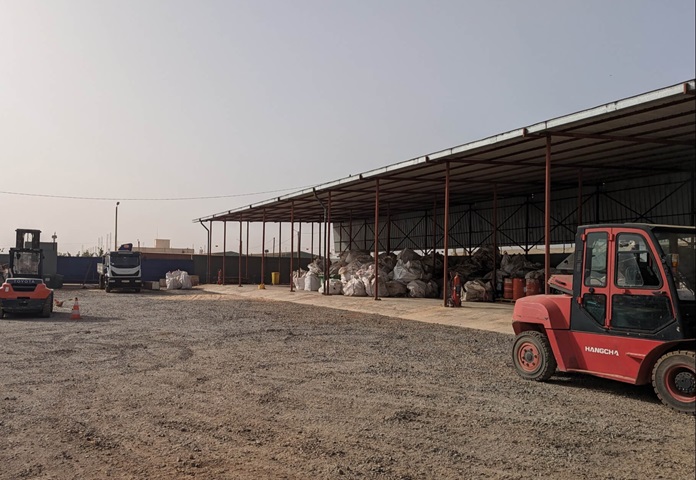
On-site, hazardous and non-hazardous wastes are separated and stored safely to reduce risks to people and the environment. Regular inspections help us identify improvements in how we manage and segregate waste.

The transfer and disposal process of each waste stream is also audited so that waste can be traced from source through to final disposal method, and that waste is managed in line with our requirements. Our monitoring data helps us measure performance, identify new recycling opportunities, and reduce landfill waste.

Continuous improvement

We are always looking for ways to improve — from setting consistent waste targets across operations to substituting hazardous materials with safer alternatives. A current focus is improving recycling rates at Shenzi to reduce volumes of wastes to landfill.

Through these actions, Woodside continues to strengthen its waste management performance

Decommissioning

Woodside is committed to executing decommissioning activities with a focus on safety and the environment, coupled with efficiency. Decommissioning is integrated into project planning and operations, from the early stages of development through to the end of field life. Our decommissioning approach recognises the importance of reusing and recycling material from decommissioning activities where possible. We expect our contractors to apply the waste mitigation hierarchy to prioritise reduction, reuse, recycling, and treatment over disposal.

Find our more about our approach to Decommissioning.

Waste Management Hierarchy

Woodside is guided by a waste management hierarchy aligned to the recommendations of the International Finance Corporation’s (IFC) guidance on waste management. This waste management hierarchy informs our approach to waste management.


DisposeAll assets must dispose of waste in a legal and environmentally responsible manner to avoid increased risk in relation to contamination, pollution, etc.
RecoverWoodside utilises Contract Resources recycling facility in Karratha to treat mercury waste. Following treatment the end product is no longer waste, instead the processed mercury is sent to Melbourne for use in dental amalgam fillings by a company that previously imported mercury – The benefits of this arrangement include import replacement, resource recovery and less landfill.
RecycleWaste management is a key requirement in our decommissioning contracts and we are working with our service providers to minimise waste to landfill by promoting opportunities to reuse and recycle our decommissioned infrastructure. Materials processed from our decommissioning projects have achieved a targeted 95% reuse/recycle of materials.
ReuseFor our Senegal assets, Woodside contracted a local waste management company, SEPCO Industries, who implemented innovative ways to reuse unique waste types. For example, they have repurposed scrap equipment for their site construction and used treated water for the incinerator scrubber instead of consuming Dakar’s limited water supply. Waste oil was sent to a Dakar cement plant, which supported the plant’s initiative to use a mixture of waste oil and new diesel in their process.
ReduceIn late 2024, Mia Yellagonga’s in-house catering contractor implemented a reusable plastic container system for deliveries. This reduced the reliance on single-use cardboard packaging in kitchens and the amount of waste generated.
PreventWoodside contracted a local waste management company, SEPCO Industries, to build a waste facility in Senegal’s capital city, Dakar, and dispose of waste from the Sangomar construction phase and preventing waste from going to landfill. The facility now includes designated waste storage areas, a high temperature incinerator, a water treatment plant, and waste shredders. SEPCO also refurbished a glass crusher, setting them up as one of the only glass recyclers in Dakar.
Emissions

Emissions

Woodside identifies, assesses and manages emissions associated with our activities to reduce potential impacts on the environment and communities where we operate. Emissions management is integrated into our environmental and operational planning.

Our approach covers air emissions, including greenhouse gas emissions, such as carbon dioxide (CO2) and methane (CH4), and non-greenhouse gas emissions such as nitrogen oxides (NOx), sulphur oxides (SOx) and volatile organic compounds (VOCs).

We also manage noise and light emissions, recognising their potential to affect people, biodiversity and sensitive environments if not appropriately controlled.

We apply a risk-based approach to emissions management, supported by engineering design, operational controls, monitoring and continual improvement. Where practicable, we seek to avoid or reduce emissions at source and ensure our activities comply with applicable regulatory requirements and align with relevant industry standards.

Through this approach, Woodside aims to support safe, reliable operations while reducing environmental impacts and protecting environmental values across our global portfolio.

To learn more about our climate strategy and how Woodside manages our Greenhouse gas emissions, visit our climate page.

The following section focuses on non-greenhouse gas emissions.

Management

Emissions are managed through Woodside’s Environmental Management Standard, which guides the establishment of minimum standards across our operations, while allowing for enhanced performance where local conditions or regulations demand it. This approach ensures we identify and manage emissions responsibly, meeting or exceeding regulatory requirements.

We assess potential impacts on the environment using inputs such as modelling and technical studies. Where high potential impacts are identified, we develop and maintain an Emissions and Discharges Management Plan to guide performance, strengthen controls, and drive continuous improvement over the life of the activity.

Monitoring and reporting

Monitoring and reporting are critical to demonstrating our emissions and discharges are effectively managed and that our controls continue to perform as intended. At Woodside, we apply a structured and risk-based approach to monitoring and reporting across our activities and projects.

We regularly verify the effectiveness of emissions controls, with the frequency and level of assurance tailored to the level of environmental risk. This helps confirm that controls are operating as designed, continue to manage potential impacts and ensure our operations remain within regulatory limits.

Environmental performance may be assessed using data from monitoring programs, supported by operational information and, where relevant, regional or site-specific data. This enables us to understand current performance, identify trends, and detect emerging issues early.

We report emissions performance, trends and risks to local management at intervals appropriate to the level of risk. This supports informed decision-making, timely corrective action and continuous improvement. Relevant emissions data is also shared through regulatory submissions, corporate sustainability reports, and public disclosures.

Through consistent monitoring, transparent reporting and regular review, Woodside aims to manage potential impacts, supports regulatory compliance and drives improvements in environmental performance across our operational activities.

At Woodside, we recognise that effective emissions management depends on accurate monitoring, transparent reporting, and continuous improvement.

We take a systematic approach to measuring and tracking emissions across our operations. Monitoring programs are designed to be fit for purpose, reflecting the nature and scale of each activity and the sensitivity of the surrounding environment. This data helps us identify trends, verify performance, and ensure our operations remain within regulatory limits.

Our emissions data is reviewed regularly and shared through regulatory submissions, corporate sustainability reports, and public disclosures. By maintaining robust data management systems, we can assess the effectiveness of our controls, respond to emerging issues, and continuously improve our environmental performance.

Where monitoring identifies potential risks or opportunities for improvement, we adapt our management practices and update our Emissions and Discharges Management Plans to ensure we continue to meet our environmental commitments and community expectations.

See our featured case study on emissions here

Hydrocarbon spill preparedness

Hydrocarbon spill preparedness

At Woodside, we are committed to managing environmental impacts and risks across our activities. Preventing hydrocarbon spills is a key focus of our environmental management approach.

Our Oil Spill Preparedness and Response Framework is informed by international best-practice conventions and is applied consistently across our global operations. Each activity is required to assess credible spill scenarios, evaluate both surface and subsea response options, and identify the most effective response techniques to minimise the impact to the marine environment.

This framework is supported by corporate and regional response plans, dedicated resources, specialised equipment, trained personnel, and strategic collaborations with industry and response organisations. Together, these measures ensure that we are ready to respond effectively should a spill occur.

By integrating our preparedness and response processes across our activities, Woodside continues to strengthen its ability to prevent, manage, and mitigate spill risks.

Our pillars

Planning

At Woodside, careful planning is the foundation of spill prevention and response. We identify potential spill risks early and put measures in place to prevent them.

Each of our facilities and projects has a Hydrocarbon Spill Response Plan, tailored to local conditions and aligned with international best practice. These plans outline how we would respond if a spill occurred and are regularly reviewed and tested through training and drills.

We also work closely with regulators, industry peers, and local communities to ensure a coordinated and transparent approach to spill preparedness.

Response

At Woodside, careful planning is the foundation of spill prevention and response. We identify potential spill risks early and put measures in place to prevent them.

Each of our facilities and projects has a Hydrocarbon Spill Response Plan, tailored to local conditions and aligned with international best practice. These plans outline how we would respond if a spill occurred and are regularly reviewed and tested through training and drills.

We also work closely with regulators, industry peers, and local communities to ensure a coordinated and transparent approach to spill preparedness.

  • Keep people and communities safe
  • Identify and stop the source of the spill as quickly as possible
  • minimise environmental and community impacts
  • Protect sensitive areas like coastlines or waterways

Effective response relies on strong leadership, clear communication, and proven response plans tailored to each location. These plans are regularly reviewed and tested to ensure we can act swiftly and efficiently in any situation

Competency and capability

Competency

Our people are central to effective spill preparedness and response. Woodside regularly conducts training, drills, and exercises to ensure our teams are ready to act quickly and safely if a spill occurs.

We work closely with regulators, government agencies, industry peers, and local communities to keep our spill response plans up to date and aligned with best practice. Sharing knowledge and resources helps strengthen regional response capability.

Through a structured training program, our personnel develop and maintain the skills needed to manage any incident or emergency. In 2025, we conducted 68 hydrocarbon spill exercises to test our response systems and continuously improve our readiness.

Capability

Woodside has strong systems and safeguards in place to prevent spills before they occur. These include robust engineering design, safe drilling practices, and strict operating procedures.

We also maintain access to specialised equipment, trained personnel, and third-party resources to support an effective response if needed.

Our response capability follows an internationally recognised tiered approach, meaning we can scale our resources to handle everything from small, low-impact incidents to complex spill scenarios. We test and review our spill response plans and procedures annually to make sure they remain effective and continue to improve over time.

Assurance

While an uncontrolled hydrocarbon release is highly unlikely, it remains a significant risk to Woodside. Woodside manages this risk through a systematic approach — identifying potential spill scenarios, putting strong preventive controls in place, and ensuring effective response measures are ready if needed.

We regularly review and update our spill preparedness plans, learning from experience and industry developments to strengthen our approach. Continuous improvement and compliance with regulations are central to maintaining the safety and integrity of our operations.

Featured case studies
Learn more about biodiversity