Decommissioning

Decommissioning involves addressing infrastructure that is no longer required in a timely, safe and environmentally responsible manner.

On this page

Decommissioning involves addressing infrastructure that is no longer required in a timely, safe and environmentally responsible manner

This can include full removal of structure or other alternatives.

Our approach

Our approach1

Woodside is committed to executing decommissioning activities with a focus on safety and the environment, coupled with efficiency. Decommissioning is integrated into project planning and operations, from the early stages of development through to the end of field life. This includes conducting assessments to inform our planning and decision making, which is underpinned by science and marine research. In the developing regulatory environment, we continue to listen, learn and respond to our stakeholders, while expanding our global decommissioning experience.

Our decommissioning approach recognises the importance of reusing and recycling material from decommissioning activities where possible. We expect our contractors to apply the waste mitigation hierarchy to prioritise reduction, reuse, recycling, and treatment over disposal.

Our approach to decommissioning considers efficiencies relevant to all offshore decommissioning activities and onshore disposal. Woodside’s decommissioning estimate and restoration provision is calculated in accordance with relevant accounting standards. Our balance sheet is audited annually as part of financial reporting.

Our performance

Our performance2

In 2025 Woodside continued execution of planned decommissioning activities spending approximately US$823 million across our portfolio.

Our priority as we conduct decommissioning work is the safety of our people and the environment. We conduct this work using recovery methods developed by Woodside and our specialist contractors, who bring experience, technical know-how and specialist equipment required for the variety of activities in our decommissioning portfolio. Woodside is committed to decommissioning outcomes aligned with local regulatory requirements and industry best practice.

Outside Australia, decommissioning is ongoing with work in Canada, at both the upstream Liard and Horn River basins and downstream Kitimat locations in British Columbia, and in the United States where one deepwater well has been plugged and abandoned and legacy site decommissioning is ongoing.

Woodside and its joint venture participants continue to responsibly progress decommissioning obligations in line with relevant local regulatory environments. Woodside will continue conducting long-term studies to further understand the environmental, economic and social opportunities and risks associated with our decommissioning activities, with the aim of optimising outcomes.

In Australia, significant progress was made across the Enfield, Griffin and Stybarrow fields, offshore north west Western Australia, as well as the Minerva field, offshore Victoria.

This included:

  • the conclusion of the ten-well Stybarrow plugging campaign (which commenced in 2024);
  • the retrieval of the Echo Yodel umbilical; and
  • the completion of plugging and abandonment activities at the Minerva field.

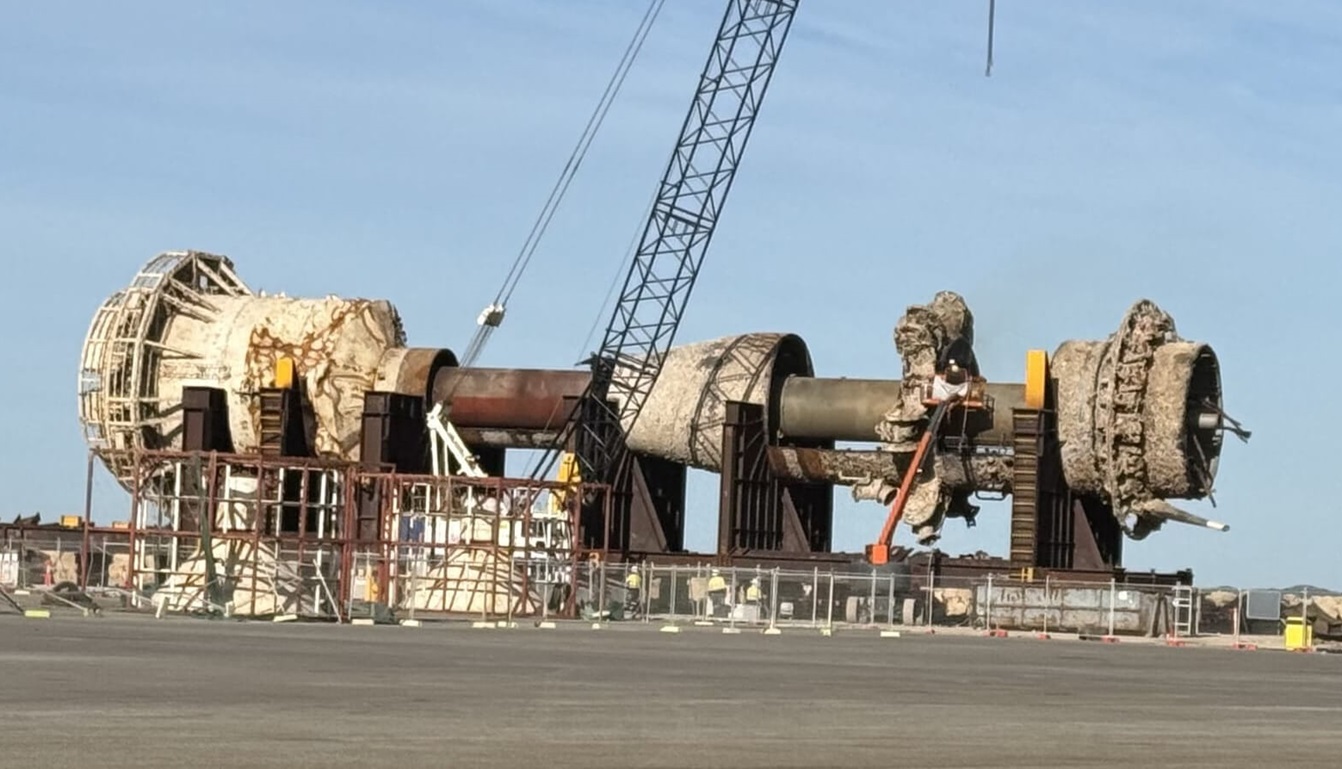
In 2025, final infrastructure was recovered from the Enfield field, concluding a multi-year decommissioning program that included permanently plugging and abandoning all 18 Enfield wells, recovering and deconstructing the Nganhurra riser turret mooring, and removing flexible flowlines, umbilicals and other subsea structures. Deconstruction of the Nganhurra riser turret mooring reused, repurposed or recycled 99.6% of materials. Enfield is the first project that Woodside has taken from exploration through development and operations, to decommissioning. The remaining activity at Enfield is to complete final surveys, which are planned for 2026.

The Gippsland Basin Joint Venture (GBJV), comprising Esso Australia and Woodside, has continued planned decommissioning activities in Bass Strait. In 2025, 69 wells were plugged and abandoned, contributing to a cumulative total of more than 220 wells permanently plugged since the campaign commenced. This includes the completion of plugging the Bream B and Kingfish A platform wells in the first half of 2025. Detailed engineering and execution planning, including submission of environmental approvals to regulators for assessment, is well advanced for the Bass Strait offshore platform removal campaign planned to commence in 2027.

Griffin decommissioning: incident response and lessons learnt

In 2025, Woodside continued decommissioning of the Griffin field, achieving significant milestones including the completion of wellhead severance activities, adding to the successful recovery of the Griffin riser turret mooring in 2024. Over 60 kilometres of pipeline, flexible flowlines and umbilicals have been recovered and transported to an onshore facility near Onslow, Western Australia for cleaning and preparation for recycling, reuse or disposal.

In May 2025, during planned flushing of a Griffin subsea flowline in preparation for removal, an unexpected fluid release occurred. The incident was managed under Woodside’s Crisis Incident Management Framework, with regulatory-approved response and monitoring plans activated. The event was short term and localised, with no lasting impact to the environment.

Woodside’s investigation identified that the condition of the flowlines was not fully understood, including the implications of historical flushing activities. Key learnings and corrective actions were implemented to improve risk identification and verification of asset conditions, enhancing planning and execution of future decommissioning activities. These actions reflect Woodside’s commitment to continuous improvement and to pursuing safe and environmentally responsible decommissioning practices.

Minerva decommissioning: incident response and lessons learnt

In 2025, during decommissioning activities at the Minerva field, offshore south west Victoria, an unplanned event occurred when plastic clamp materials were dislodged to the marine environment. The plastic clamps were used to ‘bundle’ components of the pipeline and were not exposed to hydrocarbons.

State and Commonwealth regulators were notified, and pipeline recovery activities were suspended pending revision of accepted environment plans. Preparations are continuing for the future retrieval of the remaining 5.5km of pipeline.

Prior to the suspension, over 1,500 tonnes of infrastructure and equipment was successfully removed from the Minerva field including more than 4,400 kilograms of plastic material. While most of the plastic clamps from the Minerva field were successfully recovered intact to the vessel undertaking the decommissioning works, approximately 186kg of clamp material was inadvertently dislodged.

Woodside engaged a specialist environmental contractor to conduct beach surveys and clean-up activities across the local region. Over an 11-week period (55 days), more than 50 beaches were visited. Approximately 36kg of clamp materials have been recovered by Woodside and members of the community.

Woodside’s investigation found that when the pipeline "bundle" was cut, stored residual energy was released placing stress on the bundle clamps which, in some situations, led to clamp components being dislodged to the marine environment.

Approximately half of the Minerva pipeline remains to be recovered and will require revised state and Commonwealth environment plans to complete the activity. Woodside will consult relevant stakeholders in developing new environment plans including proposed measures to mitigate the potential loss of plastic materials during pipeline recovery activities.

Planning

Planning

Planning for decommissioning starts well in advance of asset end of life to pursue mutually beneficial environmental and social outcomes for the communities we operate in.

Woodside continues to develop processes to embed sustainable decommissioning principles at a project’s development phase, including early analysis of options. Woodside recognises that decommissioning is an integral part of project planning and should be assessed holistically to support project decisions. Woodside remains committed to aligning decommissioning outcomes with local regulatory requirements and industry best practices.

The decommissioning requirements for each Woodside asset is identified in an asset-specific closure management plan, which is then maintained for the life of the asset. During an asset’s operating life, these closure plans assist future decommissioning requirements by ensuring facility operations and maintenance are aligned to meeting them.

As an asset approaches the end of field life, detailed planning for decommissioning commences. This includes framing and initiation of a decommissioning project, evaluation of decommissioning scopes and options, engagement with stakeholders on decommissioning activities and outcomes, progressing engineering studies for field execution, identifying pathways for equipment to be managed (repurpose, reuse, recycle, disposal), establishing resourcing and contracting requirements, and acquiring required regulatory approvals.

As assets approach the end of production, Woodside plans to continue to engage with stakeholders, including communities where we operate, our fellow joint venture participants and regulatory agencies, to inform decommissioning options, and identify and consider potential impacts and opportunities, in support of Woodside’s decommissioning activities.

Consistent with this, decommissioning planning has commenced for the Angel gas platform (based in the North West Shelf, Western Australia) and Ngujima-Yin FPSO facilities (offshore Exmouth, Western Australia). Planning for progressive decommissioning (via plugging and abandonment) is also underway for a number of wells in Australia, including some inactive wells associated with operating assets.

In 2025, Woodside commenced engineering work to support the decommissioning of a portfolio of subsea wells in Australia, scheduled for retirement over the next two decades. By initiating the engineering work early and creating and managing opportunities, Woodside can aim for safe and efficient plugging and abandonment, long before execution.

As part of decommissioning planning, environmental and other studies will continue in north west Western Australia. These studies seek to further understand the ecosystem associated with Woodside’s infrastructure, surrounding heritage and stakeholder values relevant to decommissioning outcomes. Data may then be used as input into assessment of benefits and impacts to inform future plans.

Research and technology

Research and technology

Woodside is a founding member of Australia’s National Decommissioning Research Initiative (NDRI). NDRI is a collaborative industry fund that undertakes independent environment research to support the future assessment on the benefits, risks and impacts of different decommissioning options for offshore oil and gas infrastructure. NDRI is in Phase 2 of its research program, which commenced in 2023 and is planned to run through to 2026. Phase 2 is focusing on improving the understanding of the marine environment around existing infrastructure.

Woodside aims to complement technical execution by exploring opportunities to build local capability and support the development of solutions that enhance sustainability and efficiency. Through targeted investment in research programs and technology development, Woodside seeks to enable continuous improvement in areas such as environmental monitoring, material reuse, and automation. This integrated approach reflects our focus on achieving positive environmental, social, and economic outcomes while contributing to the evolution of best practice in offshore decommissioning.

In 2025 Woodside supported, and plans to continue to support in 2026, studies in the following areas to inform our decommissioning activities:

  • High pressure water jetting to clean pipelines and also subsea umbilical separation for recycling
  • Technology advancement in well plug and abandonment execution
  • Recycling options for materials emerging from decommissioning, including plastics
  • Infrastructure and equipment removal execution methods
  • Enhanced utilisation of data and digital models to create efficiencies in planning and execution
  • Technologies to increase automation in decommissioning
  • Environmental impacts of infrastructure removal
  • Chemical deposition assessment
Collaboration

Collaboration

Safe decommissioning of oil and gas assets requires a collaborative effort across industry and governments.

Industry wide collaboration will help manage the challenges arising from competition from other industries and locations for resources, equipment and decommissioning facilities.

As Woodside advances through the decommissioning phase of an asset’s lifecycle, we intend to continue to identify and share valuable insights and best practices. Our commitment to learning and knowledge-sharing is evident through active participation in industry and regulatory decommissioning organisations and forums in Australia and Internationally, such as the Centre for Decommissioning Australia, Offshore Operations Committee in the United States, the Center for Offshore Safety in the United States and the International Association of Oil and Gas Producers Decommissioning Committee.

Woodside is an active member of the International Association of Oil & Gas Producers (IOGP) decommissioning working groups. As part of the IOGP, Woodside has access to subject matter experts, research data, and best practice guidelines – all of which are imperative for sustainably decommissioning our assets. Through IOGP, Woodside is also contributing to the development of sustainable concepts for key areas of interest within the global decommissioning landscape.

Woodside is a key contributor to the Western Australian Government's LNG Jobs Taskforce - Decommissioning Working Group, focused on growing local decommissioning capability. We are dedicated to sharing our expertise and best practices into this collaboration between industry and government, to support the development of decommissioning skills and training, and identifying ways to simplify complex decommissioning regulatory protocols.

In December 2024, the Australian Government released its Offshore Resources Decommissioning Roadmap, and announced the establishment of an Offshore Decommissioning Directorate that aims to “maximise the benefit of decommissioning oil and gas infrastructure to the Australian economy and the environment.” Throughout 2025 Woodside has continued to engage and support the Australian Department of Industry, Science and Resources, including the Decommissioning Directorate, to better understand and define high-level actions identified in the Roadmap.

Footnotes

    Footnotes