

Artificial light at night and turtles
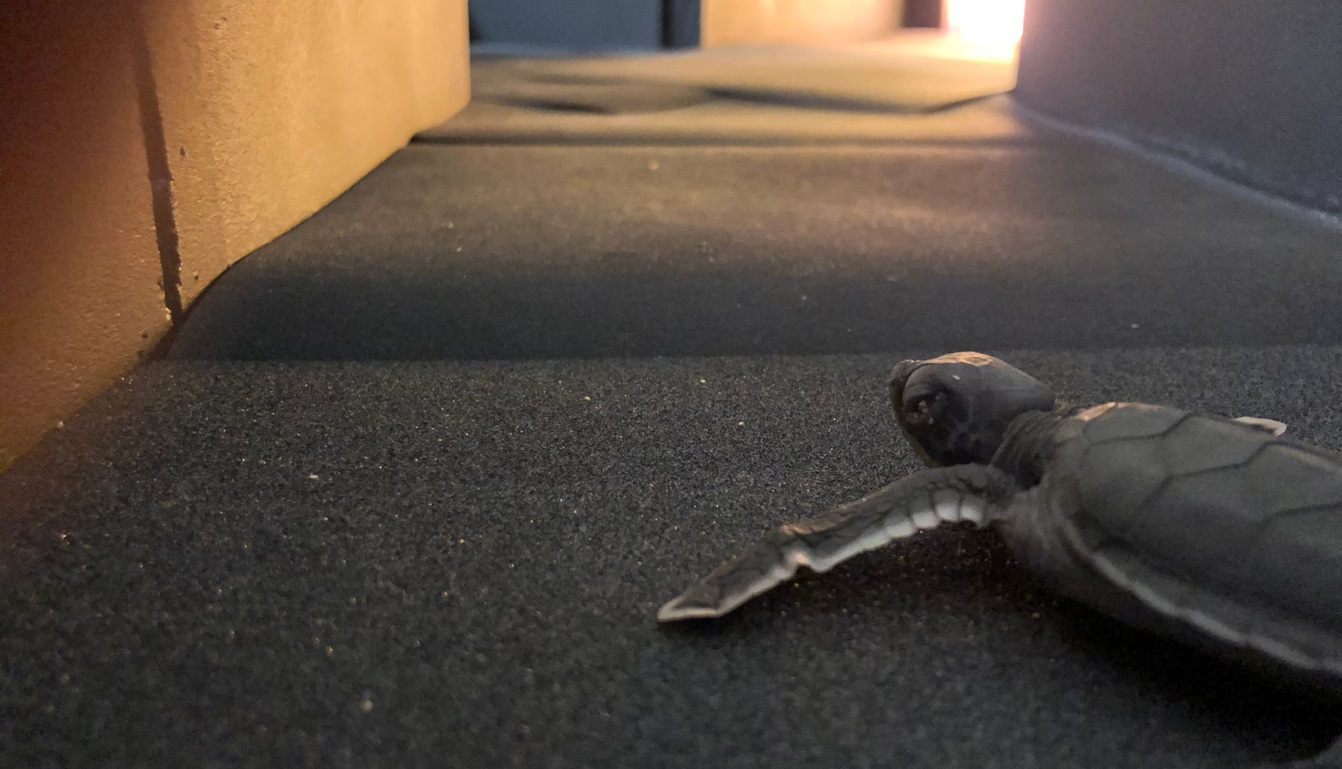
In 2025, field research was completed with the objective to develop phototaxis thresholds for marine turtle hatchlings to environmentally realistic spectral signatures of light. Using an apparatus known as a Y-maze under controlled laboratory conditions, the researchers tested how each hatchling responded to different light levels compared to darkness, to understand the thresholds at which the hatchlings’ ability to find the ocean may be hampered. The researchers tested three different types of light on the turtles: two were types of light emitting diodes, or LEDs, that are commonly used, with the aim of establishing intensity, or brightness levels that are minimally attractive to hatchlings for these lights. They also tested a blended spectrum, mimicking the light spectrum typically found in coastal areas occupied by humans. The control was no light (darkness) in the other arm of the Y-maze. The aim is to pinpoint the intensity that has minimal attraction of hatchlings for each of the different types of light tested. This research is continuing in 2026.