
Scarborough switches on for start-up
As the Scarborough Energy Project moves towards first LNG cargo later this year, the project has reached another key milestone.
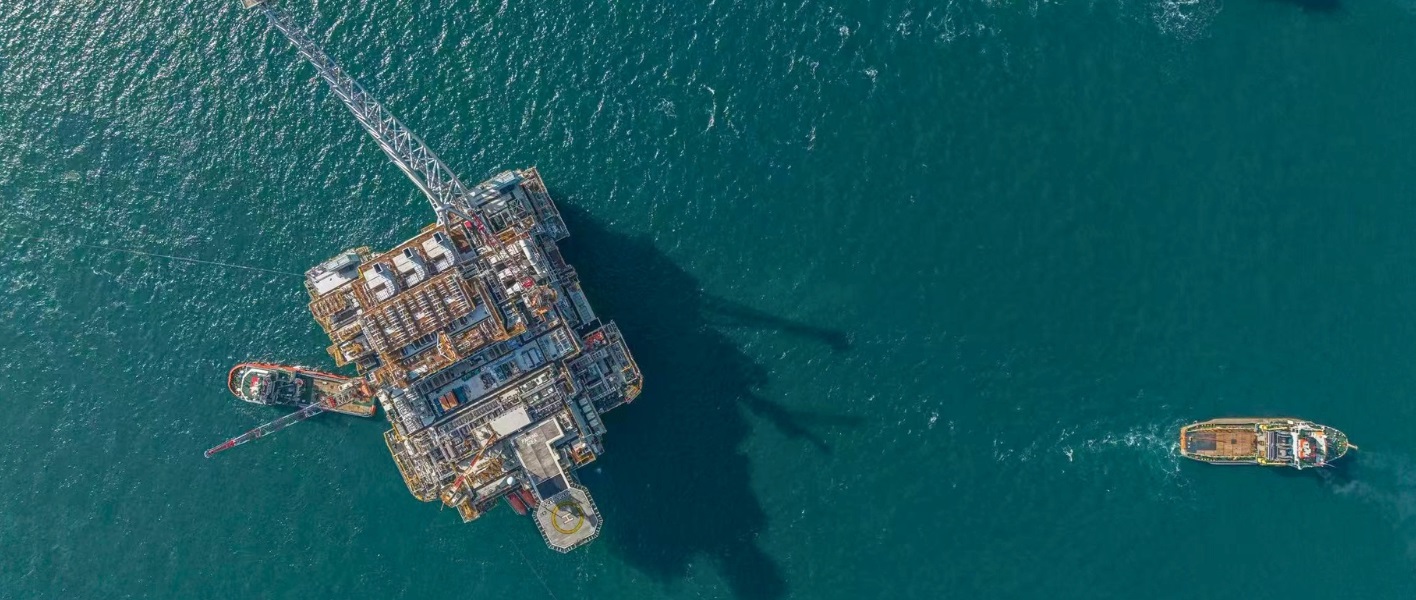
As the Scarborough Energy Project moves towards first LNG cargo later this year, the project has reached another key milestone, with fibre optics now connecting the floating production unit (FPU), stationed 375 km off the coast of Karratha in Western Australia, to Woodside’s Perth headquarters.
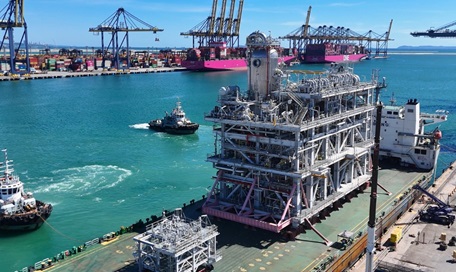
Not only is the Scarborough FPU one of the largest semi-submersible facilities ever constructed, it’s also among the most technologically advanced.
The fibre service enables the transfer of huge volumes of data to support remote operations, equipment and process monitoring, applications and cyber systems.
It will also provide entertainment, including Wi-Fi and streaming services for the Scarborough FPU crew to enjoy during downtime.
“For most people, connecting the internet means plugging a box into a wall,” notes Callum Janssan, Digital Delivery Specialist Capital Projects.
“That's effectively what we did, but it was a little bit more complicated than usual.”
A little bit more complicated, indeed.
The installation work began in 2023 with crews laying more than 1,000 km of fibre optic cable across the seabed.
They navigated water depths of up to 5,000 metres, connecting the fibre through two designated cable landing stations.
One travels east from the Scarborough field towards Port Hedland in Western Australia’s Pilbara and then down to Perth. The other travels west to connect to the Australia-Singapore cable system, before also linking back to Perth.
Without fibre, we don’t have remote operations,” explains Callum, adding: “The volume of data we generate is too large for existing satellite technology to handle reliably."
Think streaming hundreds of high-definition movies at the same time.
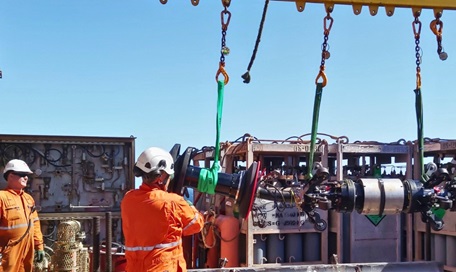
The final offshore connection took place during the hook-up and commissioning phase this year when the umbilical (the main cable linking the seabed to the facility) was pulled onboard and connected to the platform’s internal network.
“The umbilical is a critical piece of equipment as it connects hydraulics, power and fibre to the seabed,” Callum states.
After the umbilical pull-in was completed, the arrival of Tropical Cyclone Narelle in March forced crews to demobilise before the fibre could be joined.
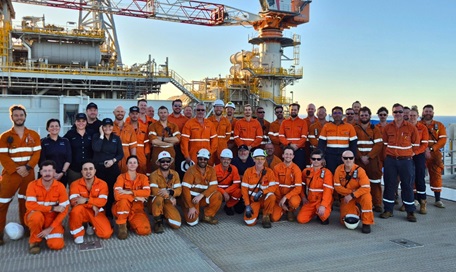
When it was deemed safe for the teams to return, it was all hands on deck to check the system hadn’t been damaged before completing the connection and running the first light test to confirm the signal could travel end to end.
“We could see light coming from the beach, and the beach could see light coming from us, which showed everything was successful,” Callum recalls.
“Seeing all that effort from a number of teams come to fruition was awesome.”
Photo provided by PHI Aviation |

The Scarborough Energy Project is now 96% complete and targeting first LNG in Q4 this year.
Ty Chapman, Scarborough Project Manager, says it’s an exciting time for Scarborough, with teams laser-focused on start-up.
“This achievement was critical to deliver on time and reflects the effort, collaboration and commitment across the project to get us here,” says Ty.
“It’s an outcome everyone involved should be really proud of.”
The Scarborough Energy Project represents a US$12.5 billion investment. It is delivering significant economic benefits for Western Australia, including thousands of jobs and is set to contribute billions of dollars in tax revenue.
Once operational, the project will provide secure and reliable gas supply for Western Australia and the wider Asia-Pacific region, delivering enough gas to power 8.5 million homes for more than 30 years.