
Deep Orient decommission mission complete
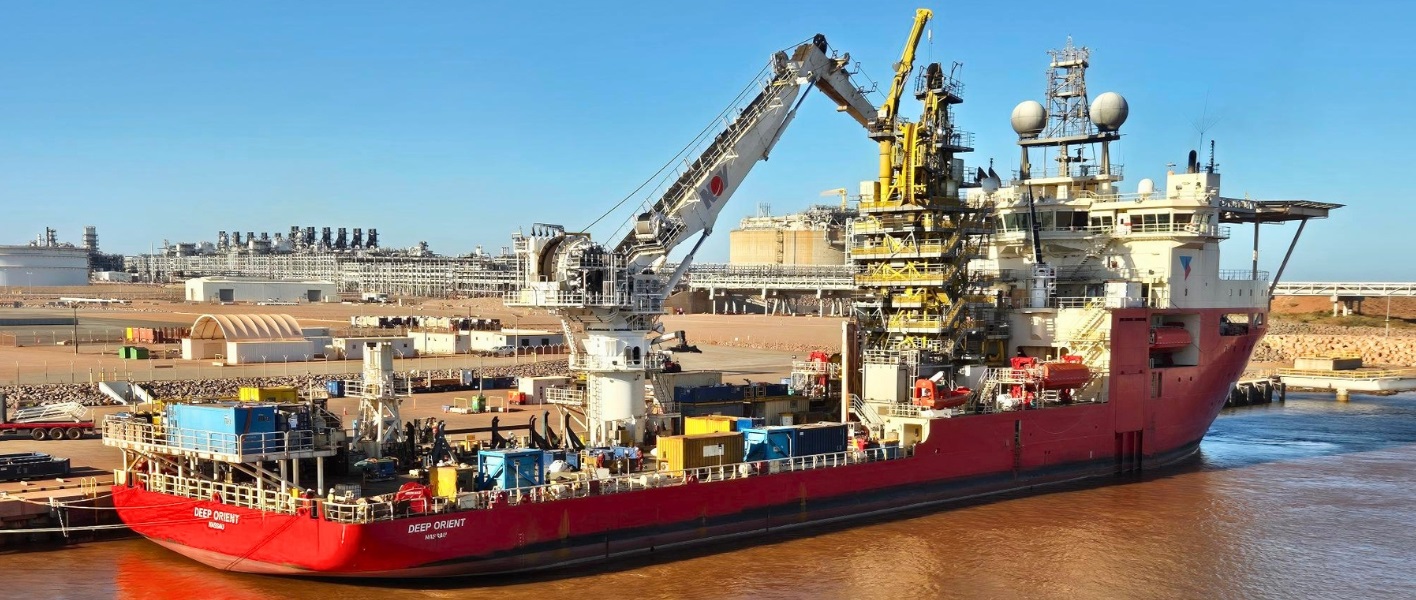
Woodside crews aboard the Deep Orient vessel have wrapped up one of their most complex decommissioning campaigns to date, safely delivering the Deep Orient program in Western Australia’s north west.
Decommissioning involves removing infrastructure that’s no longer required. It’s considered right from the very start of a project and carried through to the end of field life.
Vice President Decommissioning Andrew Lobb says it’s now part of everyday business and an important one at that.
“We work with specialist teams to safely remove facilities and plug and abandon wells, and regulators to deliver our commitments safely and responsibly,” Andrew explains.
“The successful completion of the year-long Deep Orient campaign marks a major step forward in how we deliver this work.”
The Deep Orient activities spanned the Griffin and Stybarrow fields, as well as Echo Yodel, a subsea tieback to Goodwyn A. These assets stopped producing in 2009, 2015 and 2012 respectively, bringing with them the kinds of technical challenges you’d expect from long-idle infrastructure.
And the scope was huge for the TechnipFMC-operated vessel.
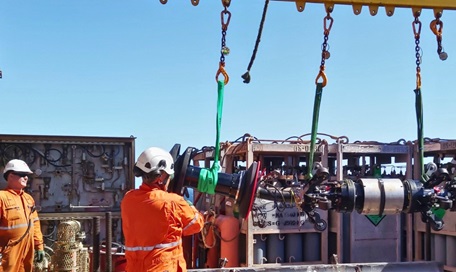
Following the safe plugging and abandonment of the wells, crews safely recovered a total of 4,000 tonnes of subsea infrastructure, including 73 km of pipelines.
That’s around the distance from Woodside’s Perth headquarters to Mandurah.
Or roughly 280 NRG Stadiums laid end to end in Houston.
They also recovered 37 subsea structures such as Xmas trees, buoys, wellheads and umbilical termination assemblies.
 |
Our decommissioning program is among the largest in Australia. Reducing risk, applying lessons learned and continually improving how we work keeps us focused on safety, the environment and carrying out the work efficiently.
Decommissioning Delivery Manager Chris See says one of the biggest achievements was Nganhurra how the team handled uncertainty.
“The results of this campaign reflect the professionalism and capability of everyone involved,” Chris notes.
Through disciplined planning and coordinated execution, we delivered a complex decommissioning program safely and efficiently."
Our focus is on reducing, reusing, recycling and treating materials before disposal is considered.
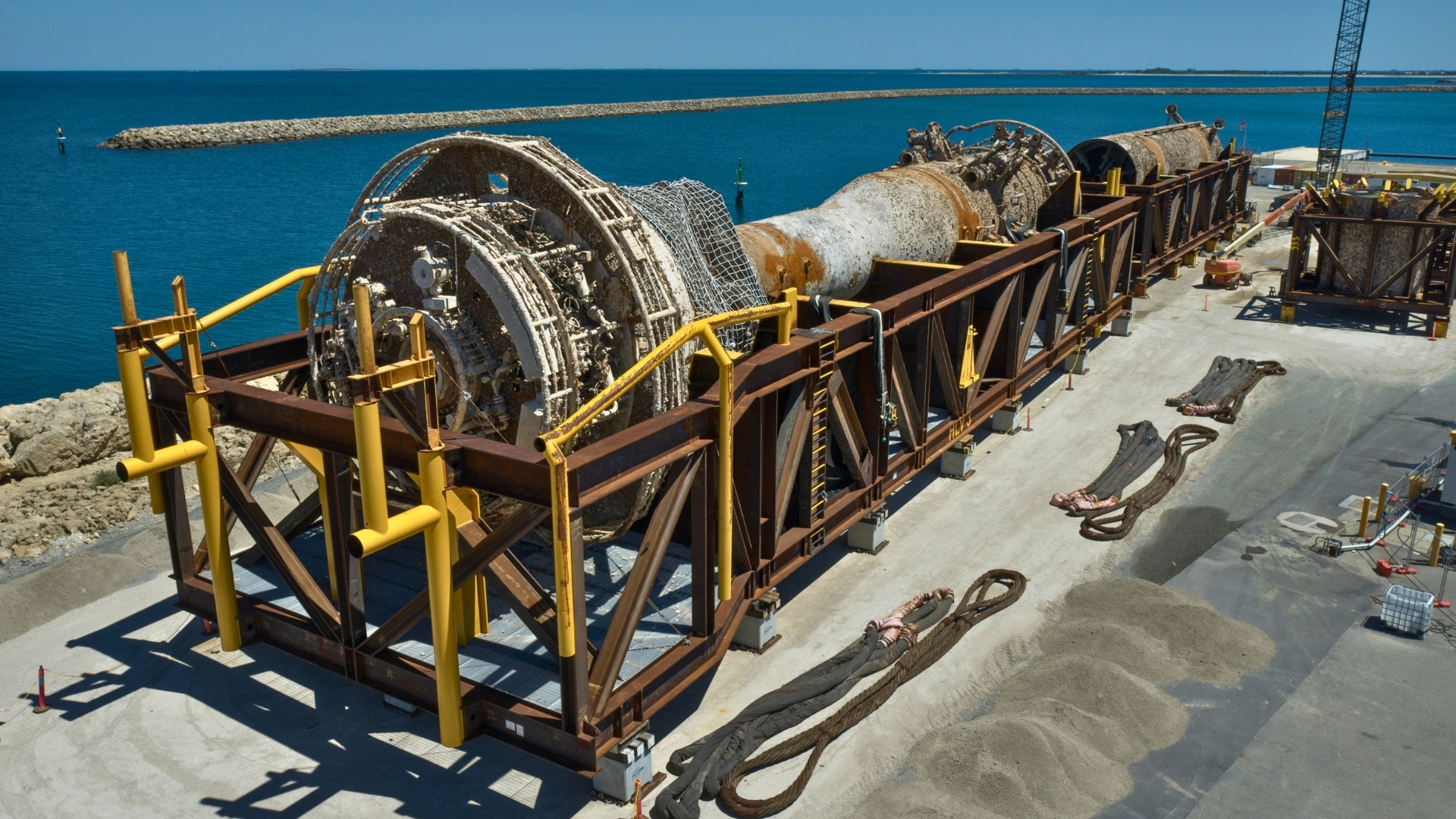
A recent example of this is the Griffin riser turret mooring (RTM), once used to secure a floating production storage and offloading vessel.
Deconstructed at the Australian Marine Complex in Western Australia last year, the nearly 2,500 tonne structure achieved a re-use and recycling rate of approximately 93 per cent – creating future opportunities and reducing disposal costs.
In 2025, crews also completed a multi-year decommissioning program at the Enfield field, approximately 38 km north of the North West Cape, Western Australia.
The program included permanently plugging and abandoning all 18 Enfield wells, recovering and deconstructing the Nganhurra riser turret mooring, and removing flexible flowlines, umbilicals and other subsea structures.
The deconstruction of the Nganhurra riser turret mooring saw 99.6 per cent of materials reused, repurposed or recycled.
This marks Woodside’s first complete lifecycle project, from exploration through development and operations to final decommissioning.