
Massive module delivered to Pluto to process Scarborough gas
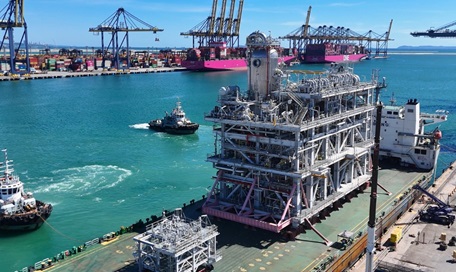
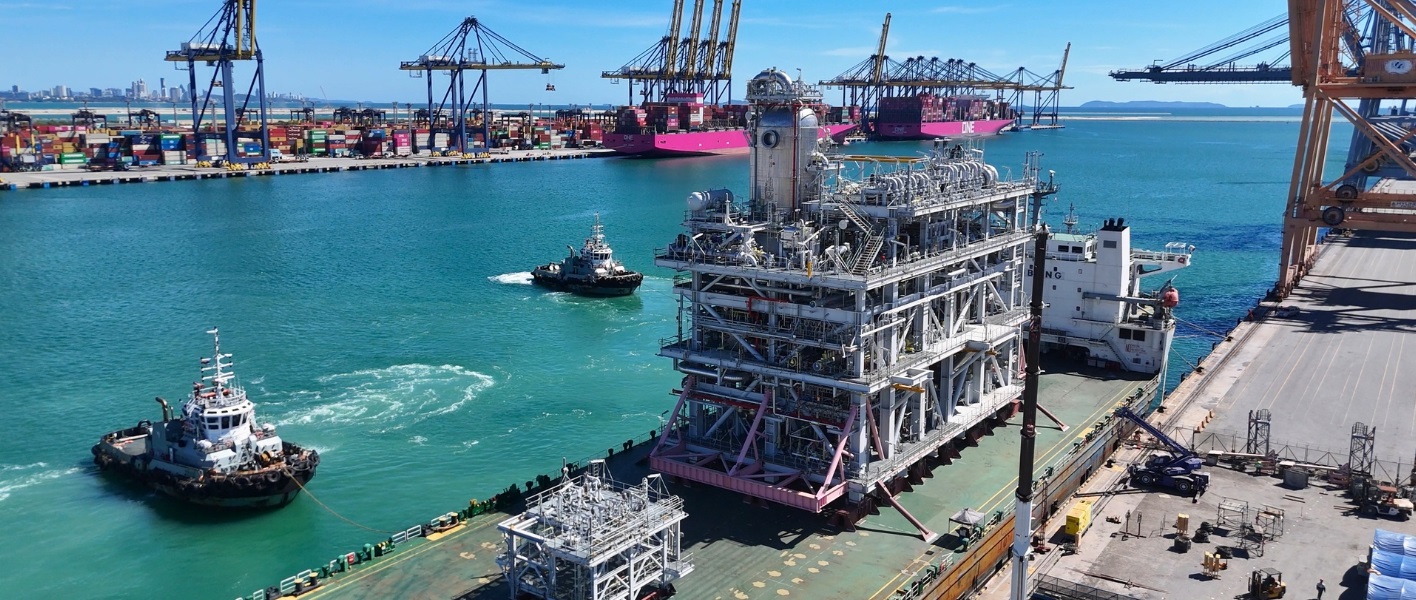
The last – and heaviest – module for Pluto LNG’s Train 1 (T1) modifications project in Karratha, Western Australia, has been safely delivered to site, marking a successful end to four years’ planning, fabrication and shipping.
“It’s a huge chapter ticked off for the project team,” says Module Yard Manager Martin Richards.
The modifications project involves upgrading Pluto LNG’s T1 facility to process gas from the Scarborough field – a key part of the Scarborough Energy Project, which was 98 per cent complete at the end of Q2 and is on track for first LNG cargo in Q4 2026.
Once operational, Scarborough will help support energy security in Western Australia and the Asia-Pacific region, with the project expected to produce enough energy to power more than 8.5 million homes for more than 30 years.1
The final module, standing as tall as a 10-storey building and weighing about 4,500 tonnes, is one of the heaviest modules we’ve ever delivered to the Pilbara.
(Check out the video below to see its arrival.)
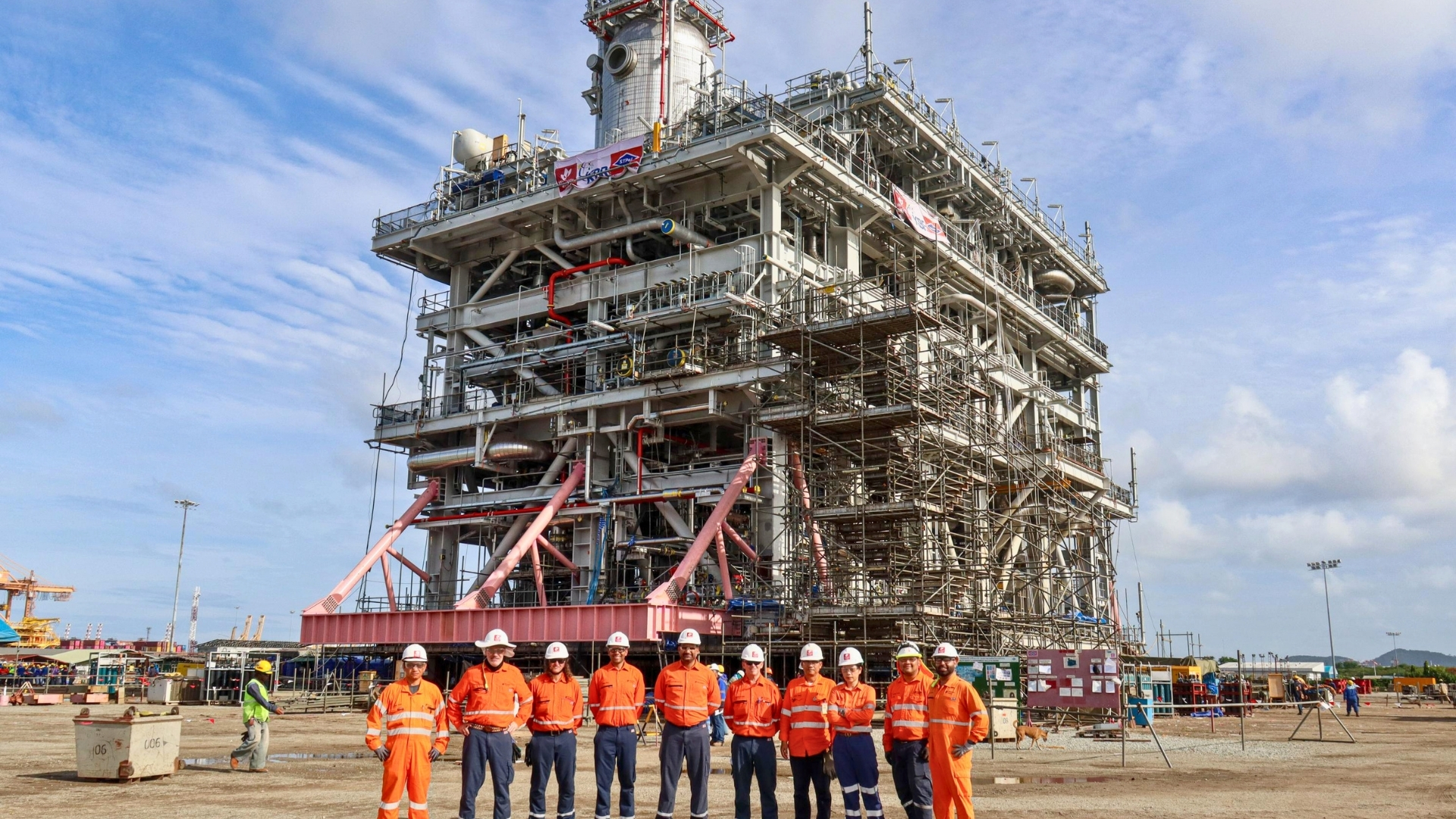 |
The ‘life’ of this module began in London, where the planning included its front-end design, and the fabrication was conducted over two years in Thailand (as it was for the other two modules).
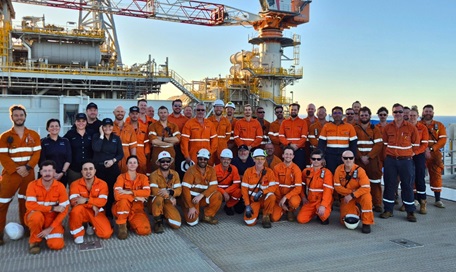
Such a massive module required a big workforce: the engineering, procurement and construction management contractor, some 2,000 site workers, 10 Woodsiders and assistance from our Australia-based employees all played important parts.
Martin reports the team rose to the challenge.
We stayed focused on keeping people safe, delivering high-quality modules and minimising carry-over work to Karratha," Martin notes.
The result?
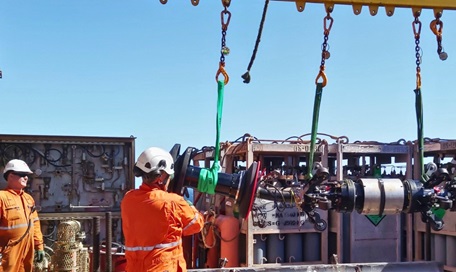
The team delivered three fully integrated modules containing thousands of tonnes of structural steel, extensive piping and complex equipment.
Shipping the final module across almost 2,500 nautical miles to its final destination was no easy feat, either.
Construction Manager Fiachra Gleeson says the level of planning required was immense.
"Every part of the route – from bridges, drainage, above- and below-ground services plus foundations – was analysed in detail to ensure the path of the module didn’t clash with anything along the way,” Fiachra says.
“Seeing that final module arrive and knowing what it took to get it here is something everyone involved should be proud of.
“This has been a massive One Team effort.”
Now installed in its final position, focus has shifted to installation, hook-up and integration of the module with Pluto Train 1.
1. Based on 2016 and 2021 Australian Bureau of Statistics data (which indicated that Western Australia was expected to have had more than 1.15 million households in 2023–2024) and the state's residential electricity consumption in 2023–2024 from the Australian Energy Update 2025. Electricity equivalence assumes generation in a modern combined-cycle gas turbine operating at average net efficiency. This estimate is illustrative only and does not represent actual electricity supply.