

Woodside Development Fund – helping communities shape tomorrow
Communities are navigating complex challenges which do not come with single or simple solutions. In 2014 Woodside posed a challenge to our own teams of how can we best support the growth of strong, healthy and sustainable communities.
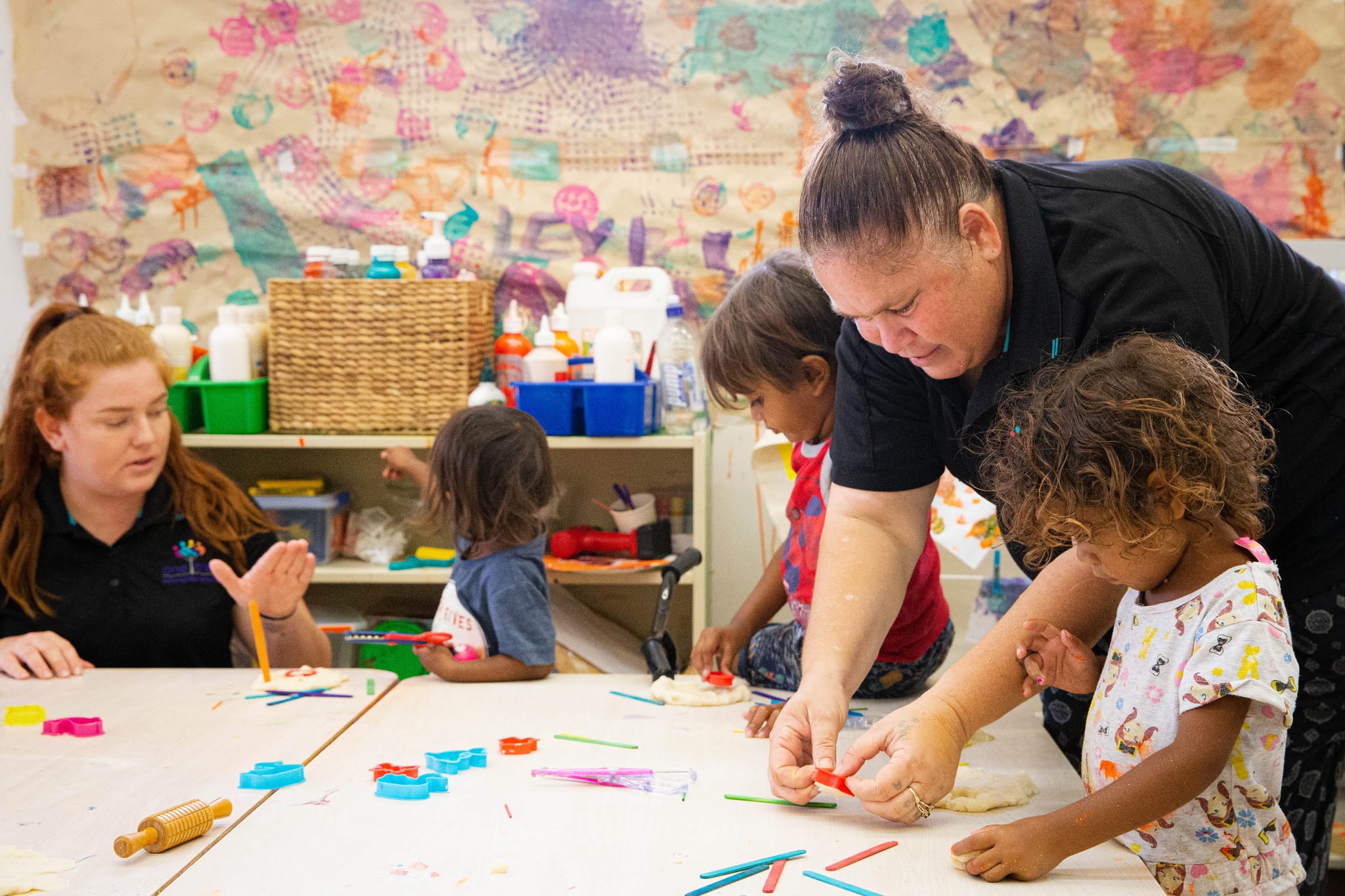
The answer was the Woodside Development Fund (WDF). The fund was a 10-year commitment to improving early childhood development (ECD) outcomes in communities where Woodside operated. The WDF was a shift away from the traditional single partner community investment to a portfolio of catalytic initiatives, many of which were place-based, to strengthen the systems supporting children aged from birth to eight years, the most critical years of human development.
“No-one understood place-based models or frameworks, what was needed or, who were needed to come together,” a member of the Early Childhood Development Focus Group reflected. “This has shifted and Woodside has been an important part of that journey.”
The WDF showed how business and communities can drive change together by disrupting systems, influencing policy, and delivering long-term impact by investing in the parts of the system that shape outcomes for children and families.
Guided by input from more than 100 early childhood experts and community members, the WDF backed community-led initiatives, used evidence to inform its decisions, and tracked impact through a shared outcomes framework.
The WDF targeted investment in three focus areas critical for lasting change:
- Collaboration
- Capability
- Advocacy.
As an early mover in early childhood systems change, the WDF played a key role in:
- Driving social innovation through place-based programs
- Shaping Australian national policy through advocacy efforts
- Building community ownership and shared value
- Demonstrating the power of long-term corporate funding to help shift systems.
“It was ahead of its time...They empowered local leaders to develop their own outcomes framework...It became a genuine community empowered movement,” said one ECD sector leader.
Throughout this period, positive shifts were observed in outcomes, each shaped by vastly different local contexts. The results translated into meaningful changes for people, places, and programs on the ground.
“Through co-designed solutions, supporting long-term outcomes, and empowering local leadership, the WDF contributed to building local capacity, improving services, and influencing policy. Demonstrating how business and philanthropy can work together with communities to support lasting, meaningful change,” said Steph Shorter, Executive Director of Impact Advisory at Impact Seed who undertook the review of the WDF.
Demonstrating impact
- Capacity building and facilities established through WDF-supported programs in Senegal and Myanmar helped unlock additional investment, amplifying long-term impact.
- In Kwinana and Cockburn in Western Australia, the Connecting Communities for Kids (CCK) innovative, community co-designed Maaraka Dabakan program improved early identification of developmental concerns, driving a 27% increase in referrals year-on-year.
- The Cost of Late Intervention report (2019), co-funded by WDF, quantified the long-term economic consequences of inaction, helping to, and changed the conversation. “It really shifted the narrative,” one stakeholder noted. “Early intervention isn’t a compelling case. But reframing it ‘if you don’t do these things, it will cost you’ that opened doors.”
- In Ayeyarwady, Myanmar where early childhood services were previously unavailable, playgroups and health checks were established across 50 villages. Each reporting period, around 2,600 children attended the playgroups.
- Through evidence-based training, 87–92% of 700 teachers and 43 inspectors in Senegal reported improved skills, marking an important shift in a country where fewer than 1 in 5 children access pre-primary education.
- Three partners in Myanmar, Kwinana/Cockburn near Perth in Western Australia and on the Dampier Peninsula in the Kimberley region of Western Australia successfully transitioned to community-led models, backed by strong local ownership and engagement.
- In Senegal, the WDF program helped shape the country’s national preschool reform after the program demonstrated the impact of its early learning approach using strong evidence and evaluation to build credibility and influence national policy
The journey wasn’t without challenges. Evolving community needs, reduced internal resourcing, weaker alignment in regions without a long-term presence, and difficulties in sustaining funding for some partners limited momentum at times.
Yet its flexible, trust-based approach enabled community-led innovation, strengthened services, and attracted new investment offering valuable lessons for future funders committed to meaningful, long-term change.
As one community partner and ECD sector leader put it: “We need to have an innovation space for testing new ideas. This was Woodside’s point of difference. WDF was a hidden gem.”.
The WDF backed people who knew their communities and their sector, it gave partner organisations room to lead, and stayed committed to lasting change. This approach wasn’t just about delivering programs. It was about creating the conditions for impact that could live well beyond the WDF itself. 1