


Helping Senegalese women gain economic independence – and find their voice
In Senegal, Woodside has partnered with PETROSEN, the National oil company, in supporting PanAfricare to assist women diversify their sources of income.
In Toubab Dialao, a picturesque fishing village about 50 kilometres south of Senegal’s capital, Dakar, some of its women belong to a local business group called Linguères de l’Émergence ‘Women Leaders in Economic Empowerment‘. For a long time, their lives were organised around the rhythm of the tides, as fishing was more than just a means of subsistence, it was the heart of community life.
With headquarters in Dakar, PanAfricare was founded and is led by Africans, with roots going back 50 years to Africare – a non-government organisation that pioneered participatory development programs and built strong partnerships with communities across sub-Saharan Africa.
With Woodside and PETROSEN’s support, PanAfricare runs workshops which introduce the people of Toubab Dialao to more diversified sources of income, including soap-making, fruit and vegetable processing, and the production of juices using local ingredients. In 2025, 28 workshops were held, training more than 540 women. For the first time, the women could create products that had value year-round, independent of the ocean’s tides.
The women also began learning Wolofal, the written form of Wolof – a widely spoken language in Senegal. What began simply as reading and writing lessons, soon became a source of pride. “Some of us can now read and write in our own language,” one participant proudly declared. “It may seem small, but for us, it has opened a new door,” she said.
From an entrepreneurial perspective, learning written Wolofal enabled the women to keep records, organise production and improve communications. It also strengthened their confidence, created positive effects within their families and communities, and fostered greater participation and economic empowerment.
With new skills, growing confidence, and the equipment needed to apply them, the group began producing and selling their products – both to the group’s members and at the local market. Income became more stable, and responsibilities are now shared with greater confidence. Improved literacy levels enable the women to take on tasks previously handled by an accountant, reducing reliance on a single person. Instead of depending entirely on the uncertainty of the sea and weather, they may now run their own activities, plan ahead, and manage resources more predictably and with less pressure.
The profits generated by their activities also enabled women to reinvest in their projects, supporting their goal of becoming fully self-reliant.
Adja Fatou Dramé, President of Linguères de l’Émergence said, “Now, even without fishing, we have other activities thanks to PanAfricare’s trainings.”
“ This project has opened many doors for us. We now make soap, process fruits and vegetables such as coconut-ginger, and produce local juices.”
The impact in Toubab Dialao is clear: 120 women have been trained and equipped, new sources of income created, and literacy
strengthened. The benefits go even further. Something deeper has emerged: the women now display greater confidence and independence and enjoy a stronger voice within their community.
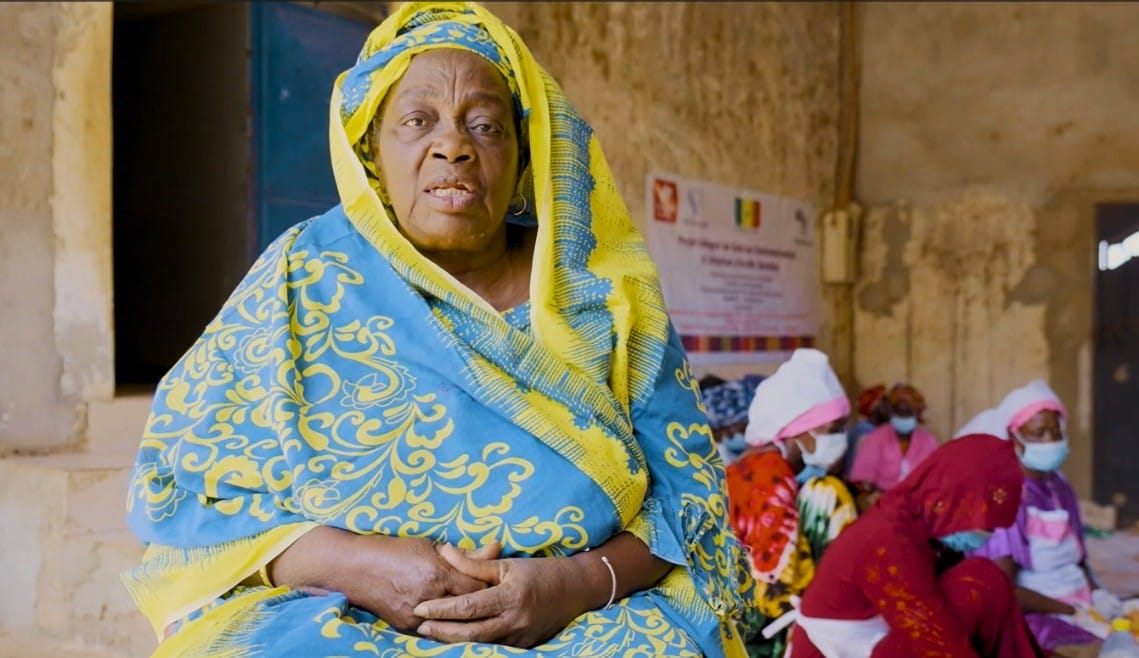
Adja Fatou Dramé, President of Linguères de l’Émergence