New Energy

Customer-led solutions for the energy transition

Innovating and investing in the global energy transition

As the energy transition progresses, we expect demand to increase for new energy products and lower-carbon services.1

Woodside is investing to add these new products and services to our existing portfolio of oil and gas assets, seeking to match the pace, scale and needs of customers as they determine their own decarbonisation pathways.

Lower-carbon hydrogen produced from natural gas reforming with CCS can deliver more cost-effective fuels than electrolytic hydrogen, while markets for hydrogen mature. This approach focuses on carbon intensity rather than production method.

2024 AT A GLANCE

How we’re supporting the energy transition

  • US$2.5 billion

    Cumulative spend since 2021 on new energy products and lower carbon services. [2][3][4][6]

  • US$5 billion

    Targeted investment in new energy products and lower carbon services by 2030. [3][4]

  • 5 Mtpa CO2-e

    Emissions abatement target to take final investment decision on new energy products and lower-carbon services by 2030. [3][5]

  • 1.6 Mtpa CO2-e

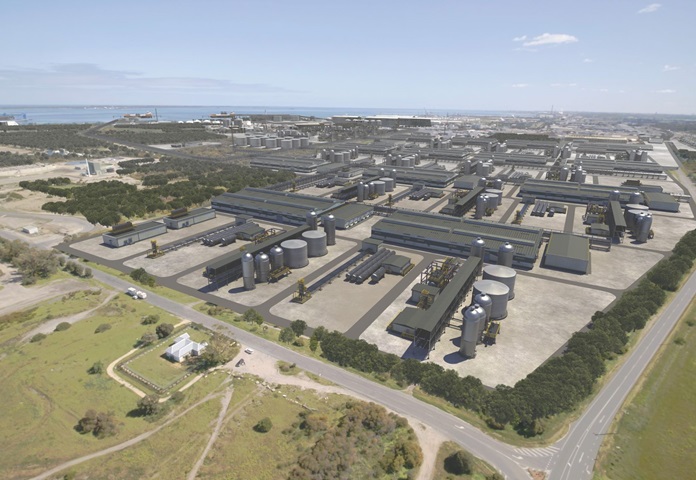
    Potential customer emissions (Woodside Scope 3) avoidance from Phase 1 Beaumont New Ammonia. [6][7]

The future of energy is constantly evolving with a growing demand for lower-carbon, affordable and reliable energy.1

Today, our portfolio includes a diverse range of oil and gas assets. We’re also developing a portfolio of new energy products and lower-carbon services.2

Across our portfolio, we seek to match the pace, scale and needs of our customers as they determine their own decarbonisation pathways. We have a scope 3 target of US$5 billion investment in new energy products and lower-carbon services by 2030.3,4 We also have an emissions abatement target to take final investment decisions on new energy products and lower-carbon services by 2030, with total abatement capacity of 5 Mtpa CO2-e.4,5

[1] Woodside uses this term to describe the characteristic of having lower levels of associated potential GHG emissions when compared to historical and/or current conventions or analogues, for example relating to an otherwise similar resource, process, production facility, product or service, or activity.

[2] Cumulative spend against the investment target at the end of 2024 includes 80% of the total $2,350 million for the Beaumont New Ammonia Project acquisition. The remaining 20% will be paid at Project completion.

[3] Includes pre-RFSU spend on new energy products and lower carbon services that can help our customers decarbonise by using these products and services. It is not used to fund reductions of Woodside’s net equity Scope 1 and 2 emissions which are managed separately through asset decarbonisation plans.

[4] Scope 3 targets are subject to commercial arrangements, commercial feasibility, regulatory and Joint Venture approvals, and third-party activities (which may or may not proceed). Individual investment decisions are subject to Woodside’s investment targets. Not guidance. Potentially includes both organic and inorganic investment.

[5] Includes binding and non-binding opportunities in the portfolio, subject to commercial arrangements, commercial feasibility, regulatory and Joint Venture approvals, and third party activities (which may or may not proceed). Individual investment decisions are subject to Woodside’s investment targets. Not guidance.

[6] Scope 3 emissions abatement capacity of 1.6 Mtpa CO2-e assumes supply of carbon abated hydrogen and CCS operational. Woodside has made the assumption to estimate the avoided emissions through the displacement of conventional marine fuel. Actual displaced emissions may differ based on actual use case.

[7] The information regarding Beaumont New Ammonia (BNA) in this update does not contain all the underlying context and details that is included in the announcement "Woodside to acquire OCI's Clean Ammonia Project", released 5 August 2024. Refer to the announcement for the full explanation of the underpinning assumptions, uncertainties, and context relevant to BNA. https://www.woodside.com/docs/default-source/asx-announcements/2024/woodside-to-acquire-oci's-clean-ammonia-project.pdf?sfvrsn=cf35e9ed_1.

What do we mean by new energy products and lower-carbon services?

Woodside uses the term new energy to describe energy products and technologies, such as hydrogen or ammonia, that are emerging in scale, but which are anticipated to grow during the energy transition due to having lower greenhouse gas emissions at the point of use than conventional fossil fuels.

The term lower-carbon services is used by Woodside to describe technologies, such as CCS or carbon offsets that could be used by customers to reduce their net greenhouse gas emissions.

Our new energy products and lower-carbon services

Hydrogen is the simplest element in the universe. It’s abundant, versatile, and can act as an energy carrier, storing and transporting energy in a usable form from one place to another. 

Hydrogen has been recognised as a key option to realise the net zero greenhouse gas emissions commitments that governments have announced in recent years.

Lower-carbon hydrogen can be produced through a process of natural gas reforming combined with measures to reduce carbon emissions. Natural gas reforming uses thermal energy in a chemical reaction to generate hydrogen from natural gas. Carbon dioxide (CO2) is also produced as part of the natural gas reforming process, however technologies such as Carbon Capture and Storage (CCS), where the CO2 is captured and transported underground for safe and permanent storage, can assist in managing this.

Ammonia can be used as a carrier for hydrogen, either to be used directly (as feedstock for chemicals or as a fuel for power generation and maritime transportation) or to be reconverted to hydrogen. Ammonia may be produced from hydrogen through a process called the Haber-Bosch process.

Both lower-carbon hydrogen and ammonia offer the potential for decarbonising parts of the energy system where other measures such as direct electrification are more difficult or expensive, including sections of heavy industry and long-distance transport.

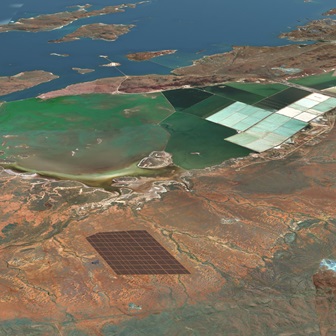
We plan to progress a large-scale solar photovoltaic farm, complemented by a battery energy storage system to deliver renewable energy to Pluto LNG, subject to securing an acceptable transmission solution and associated commercial arrangements.

Some technologies can abate emissions by capturing greenhouse gases and durably storing them out of the atmosphere.

Woodside, as a participant in various joint ventures, is involved in five Australian greenhouse gas assessment permits and has progressed three non-binding memoranda of understanding to enable studies of a potential CCS value chain between Japan and Australia. In 2025, Woodside also signed a storage study agreement with Petros to evaluate the technical and commercial aspects of offshore carbon storage in an underground site in Central Luconia, Sarawak.

Carbon Capture and Utilisation (CCU) at Woodside involves pathways that valorise carbon dioxide and methane, and integrate enabling technologies and product streams, such as renewables and energy storage systems, to convert greenhouse gas emissions into valuable products or services, while also mitigating those emissions.

Since 2019, Woodside has been exploring options to evaluate, validate and apply CCU concepts using licensed technologies in a proprietary systems-level architecture.

CCU is a growing field with intellectual property held by specialised technology companies, many of which are in the startup or scale-up stages. Woodside is seeking to assess and utilise CCU technologies to diversify methods for reducing GHG emissions, through either direct use or abatement.

COLLABORATION

Collaborating to develop demand for new sources of energy

We expect the development of new energy markets to be similar to the development of the LNG industry many years ago, such as in the need for government support and opportunities for collaboration. Like then, we are building relationships across the value chain and aligning solutions to customers with options to match the scale and pace of the energy transition.

We have been investing in customer relationships with our traditional LNG buyers and we are extending that to new and emerging customers in new energy.

Footnotes

    Footnotes